How an Accident on Your Carfax Affects Your Car's Value

Samir Osman | Co-Owner & AMVIC-Licensed Wholesaler, DriveOffer
June 22, 2026Updated September 12, 2026
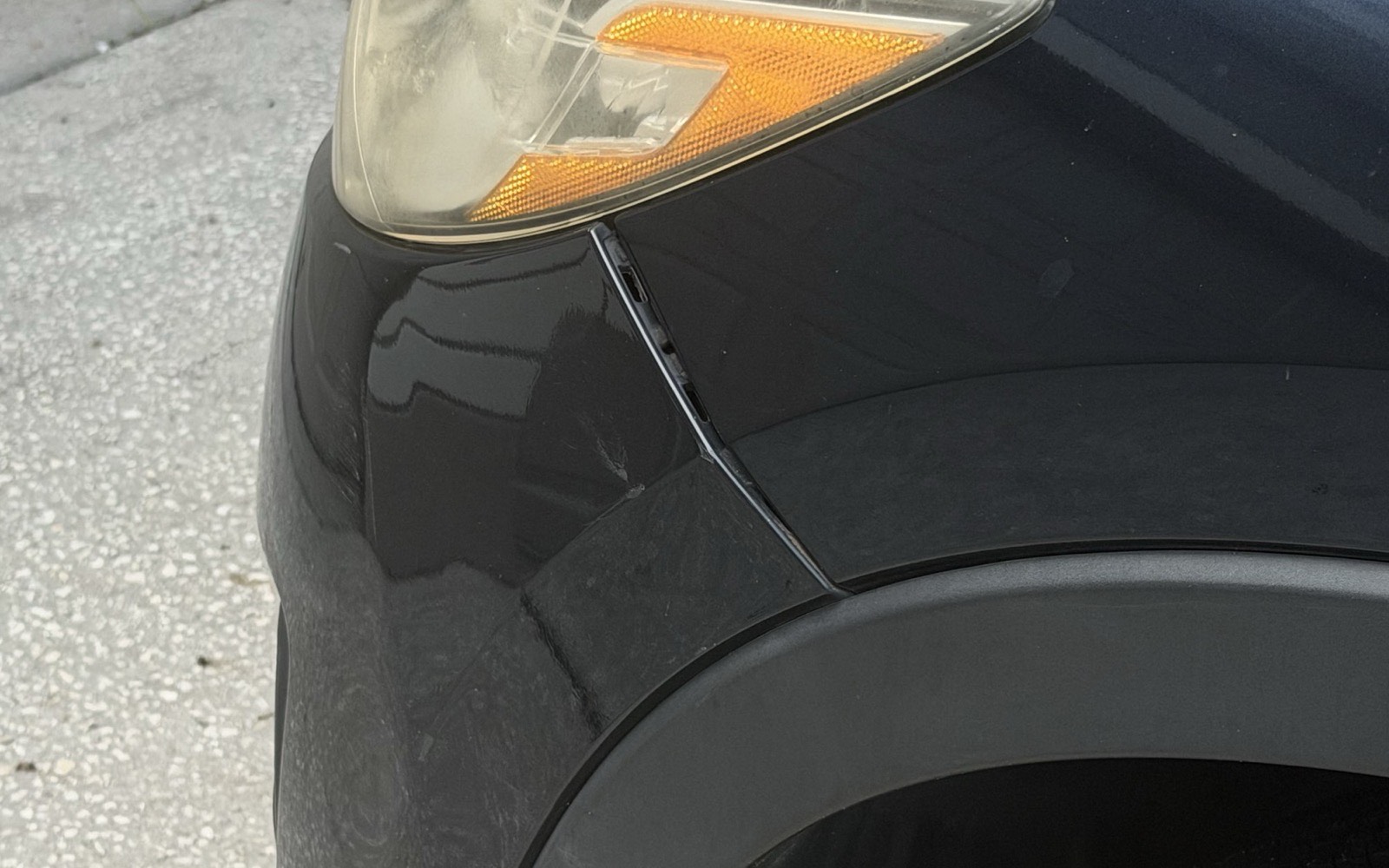
Wide low three quarter view of the front corner of a dark car in raking evening light, the bumper cover and the fender reading as very slightly different shades of the same colour where the light crosses the seam between them
Article summary
- On our own buying, an accident costs roughly $1,000 off the offer for every $5,000 of insurance claim. A car we would pay $20,000 for with a clean record is about $19,000 with a $5,000 claim and about $17,000 with a $15,000 claim. It is the claim amount that prices the car, not the fact that there was an accident.
- A repair does not take the claim back off the value, however good it is. The entry stays on the record and affects what the next buyer can finance the car at, and that follows the vehicle rather than the bodywork.
- Salvage and rebuilt are a different order of magnitude from a claim. We buy rebuilt vehicles at roughly half of what the same car would be worth with a clean history, and in Alberta a repaired Salvage vehicle becomes Rebuilt permanently once it passes a Salvage Vehicle Inspection.
- The ladder does not stop at a point where the car becomes unsellable. The last car we bought before writing this was a 2021 Mercedes C43 carrying a $29,000 claim, and we paid the seller's number without him moving a dollar. A large claim changes the price, not whether the car gets bought.
The thing that moves an offer is not the accident. It is the claim amount attached to it. Two cars can both show an accident on the report and be priced thousands of dollars apart, because the entry is not what gets priced. The claim is.
Across our own buying it works out at roughly $1,000 off for every $5,000 of claim. Here is where that number comes from, what it does not cover, and why a good repair does not take it back off.
How much does an accident on your Carfax lower your offer?
Start with a car we would pay $20,000 for with nothing on the record. With a $5,000 claim against it we are at about $19,000. At a $10,000 claim, about $18,000. At $15,000, about $17,000. Every $5,000 of claim is about $1,000 off the number.
That is a working rule rather than a formula. It tells you the size of the thing before you get emotionally involved with it. Most sellers brace for the whole accident, and the whole accident is not what is being priced.
It also sits alongside everything else rather than replacing it. We price on three things: kilometres, claims, and the condition of the car in front of us. A claim is one input into that, not a penalty bolted on at the end of it. The rest of what moves a number is covered in what affects your car's value.
Want the number for your own car? It takes about a minute.
Get a Free OfferWhy does a properly repaired car still lose money?
Because the entry on the report does not describe the state of the car. It describes the car's history, and the history goes with the car into the next sale rather than staying with you.
What we do with a claim car is the clearest way to see it. We buy to sell on, so the number we can pay is set by what the car is worth to the buyer after us, and that buyer is reading the same report we read, against the same clean record cars we were reading it against. The repair invoice is not part of that comparison. Nobody after you is buying the repair.
Financing is part of what keeps the gap there. A claim affects what the car can be financed at and by whom, and that follows the vehicle rather than the bodywork. The panels can be flawless and that conversation is still a different conversation than it would have been.
Repairing the car was the right call, and on a car you were keeping it was money well spent. It is just not money that comes back at the sale, because nobody is buying the repair. They are pricing the record.
The record is rarely even the first thing that gives it away. Every car we come out to gets walked first, around the body, looking for dents, scrapes and anything that was not in the photos. Paint that does not quite match in daylight, a seam that runs wide at one end, a panel sitting proud of the one beside it: the walk finds those, and the report only confirms what it already suggested. Neither the quality of the repair nor your account of it changes what those two things agree on.
Is there a claim amount that makes a car unsellable?
No, and the ladder keeps going well past where most sellers assume it stops. The last car we bought before writing this was a 2021 Mercedes C43 carrying a $29,000 claim. The seller had his insurance records with him, knew exactly what was on the car, and would not drop a single dollar. We paid his number. We were at the bank with him about ninety minutes after first looking at the car.
A large claim changes the price. It does not decide whether the car sells.
What happens if the car is salvage or rebuilt?
That is a different order of magnitude and it is not on the same ladder. We do buy rebuilt vehicles, at roughly half of what the same car would be worth with a clean history.
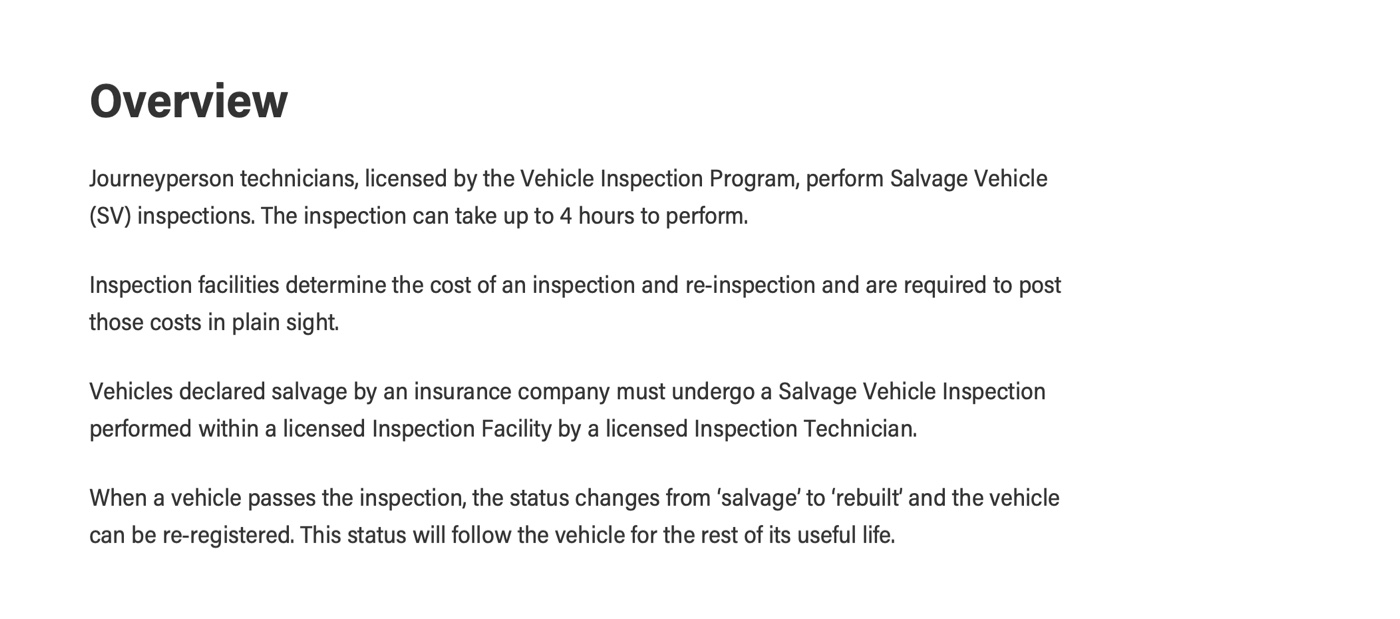
Alberta records five statuses against a vehicle: Active, Salvage, Rebuilt, Non-Repairable and Unsafe. If a Salvage vehicle is repaired and passes a Salvage Vehicle Inspection, it becomes Rebuilt, and it stays Rebuilt. There is no later point at which it quietly becomes an ordinary used car again.
How do you find out what your claim was actually worth?
The report tells you an accident happened. The dollar figure is what prices it, and your insurer is the reliable source for that figure. Turning up with the claim record leaves nothing to establish and nothing to take anybody's word on, and an appointment on a car that is exactly as described can be done in ten to fifteen minutes. The C43 seller held his price precisely because he could show what the claim was, which meant he already knew what the car was worth with it.
Is it better to disclose it or let the buyer find it?
Disclose it. We ask about claims and accidents before we come out and we pull a report either way, so an undisclosed claim gets found rather than avoided. More than once we have been told a car has nothing on it and then found a total loss claim sitting there. In our experience that is usually not somebody trying it on, because a car can be bought used with a claim already against it and nothing about driving it would tell you. What a surprise like that does to the number at the door is the main reason an offer moves at the appointment.
None of this asks you for a spotless record. It asks for an accurate one. The offers that hold from the screen to the driveway are the ones made against the car that is actually there, claim and all.
What Lars Says
Lars Sahlen spent thirty years in the trade, fifteen of them at CarMax, working with the buying and reconditioning teams. He has no stake in what we pay for your car, which is why this is worth hearing from him rather than from us. He will tell you the trade sees a repaired car long before the report is open, and that where it lands has nothing to do with how good the bodywork is. Wholesale auctions grade vehicles by announced condition, green light down to red, and structural damage moves a car between those grades. You are pricing a car that looks and drives fine. An appraiser is pricing which grade it sells in. That gap is where most of the argument about accident history actually happens.

Lars Sahlen
Automotive industry veteran, 30+ years in sales, service, reconditioning and operations
Hear it in the interviewFrom our experience: We buy cars with claims on them across Alberta every week, and we price them the same way every time: off the claim amount on the record, not off the accident and not off the repair invoice.
Ready to skip the hassle?
Tell us about your car and a DriveOffer specialist will prepare your free offer. No obligation, no haggling.
Frequently asked questions
- How much does an accident on my Carfax lower my car's value?
- Roughly $1,000 off the offer for every $5,000 of insurance claim, going by what we pay in Alberta. A car we would buy at $20,000 with a clean record is around $19,000 with a $5,000 claim, $18,000 with a $10,000 claim and $17,000 with a $15,000 claim. The size of the claim sets the number, so a small claim usually costs far less than sellers expect.
- Why does the claim amount matter more than the accident itself?
- Because the claim amount is the only measure of how bad it was that anybody can check, and it drives the part that follows the car. A claim on the record affects what the next buyer can finance the vehicle at, and that does not change when the panels are straight again.
- Does a rebuilt vehicle lose more value than a car with a claim on it?
- Considerably more. We buy rebuilt vehicles at roughly half of what the same car with a clean history would be worth. In Alberta a Salvage vehicle that is repaired and passes a Salvage Vehicle Inspection becomes Rebuilt for the rest of its life, so the discount never wears off.
- Will you still buy my car if there is an accident on the record?
- Yes, including rebuilt vehicles and cars carrying large claims. The last car we bought before writing this had a $29,000 claim on it and we paid the seller's asking price without him moving a dollar. The history changes the number, not whether the car gets bought.
Where this came from
This article draws on our own interviews. Each link opens the transcript at the part it came from.
- The truck that was sold as a minor accident · Rick Carter, Owner, South Riding Automotive, and ASE-certified master technician · Rick Carter, September 12, 2026
- Why a clean history report is not proof · Rick Carter, Owner, South Riding Automotive, and ASE-certified master technician · Rick Carter, September 12, 2026
- What has to be repaired properly after a crash · Rick Carter, Owner, South Riding Automotive, and ASE-certified master technician · Rick Carter, September 12, 2026
- The total loss claim nobody mentioned · Hasan Tayem, Field Operations Manager · Hasan Tayem, September 10, 2026
- The Audi in Vancouver, disclosed honestly · Hasan Tayem, Field Operations Manager · Hasan Tayem, September 10, 2026
- What he sees walking around a car in thirty seconds · Lars Sahlen, Automotive industry veteran, 30+ years in sales, service, reconditioning and operations · Lars Sahlen, September 9, 2026
- The damage dealers don't mention, and the auction's red lights · Lars Sahlen, Automotive industry veteran, 30+ years in sales, service, reconditioning and operations · Lars Sahlen, September 9, 2026
- Fixing an accident before you sell it · Lars Sahlen, Automotive industry veteran, 30+ years in sales, service, reconditioning and operations · Lars Sahlen, September 9, 2026
- What an accident claim actually costs, in dollars · Samir Osman, Co-Owner & AMVIC-Licensed Wholesaler, DriveOffer (Edmonton, AB) · Samir Osman, September 6, 2026
Recent articles
Vehicle Value
What Affects Your Car's Value in Alberta
What moves the number, what does not, and how to predict yours.
Vehicle Value
Why a Car Offer Can Change After the Inspection
What gets checked, and what actually moves the number.
Vehicle Value
Mileage, Condition, and Trim
How kilometres, wear, and trim change your price.
Vehicle Value
How Car Offers Are Calculated
How we work out a fair offer.