What Affects Your Car's Value in Alberta

Samir Osman | Co-Owner & AMVIC-Licensed Wholesaler, DriveOffer
June 22, 2026Updated September 12, 2026
Wide 2.4:1 frame of a single used SUV parked alone on a gravel lot at dusk, an appraiser standing back from the front quarter with a phone in one hand and his eyes on the car rather than the camera, empty prairie sky filling the right third of the frame
Article summary
- What your car is worth is its wholesale value: what the same year, model, trim and kilometres trades for between dealers. A retail lot price for the same car is higher because it carries reconditioning, any warranty the dealer attaches and the cost of sitting there, and none of that is yours to sell.
- Three things do nearly all the work: your kilometres, the dollar amount of any insurance claims, and the condition a stranger sees in the first thirty seconds. Trim and options move the number far less than most sellers expect.
- Money spent fixing a car before you sell it almost never comes back. People replace a windshield or do minor maintenance hoping it adds $1,000 or $1,500 to the price, and it does not. The receipts for work you have already paid for cost nothing to gather.
- The typical gap between what a seller expects and what the car is worth is five to ten thousand dollars, and it almost always comes from anchoring to asking prices rather than to anything anybody was actually paid. Most sellers who go and test the market arrive at the same number from the other direction a week or two later.
There is a real number and it is knowable. What makes it feel unknowable is that almost every price you can see is not it: the windshield price on a lot, the asking price on Marketplace, the figure somebody floated on a trade two years ago.
Here is what the number is actually built from, so you can land close to yours before anybody quotes you.
What number are you actually asking for?
Any offer you get for your car is a wholesale number. Market value is what a dealer can buy the same car for at auction. That is the definition the whole trade prices against. A lot price is a retail price, carrying reconditioning, any warranty the dealer attaches and the weeks the car sits there, which is why it is thousands higher and why none of that gap is yours to sell.
How the number gets assembled on our side is that article's whole subject.
Why does your car get compared to other cars?
Because nobody pricing your vehicle is asking what it is worth in isolation. They are asking what the same thing costs somewhere else this week, and for most cars the answer is not much more, with no waiting.
That comparison set is what caps the number. A genuinely unusual car, very low kilometres and kept exceptionally well, does stand out. Most are what the trade calls bread and butter and get priced against the others exactly like them.
Rows of near identical white and grey SUVs lined nose to tail in a wholesale auction lane, shot low from one end so the line runs away out of the frame
Want the number for your own car? It takes about a minute.
Get a Free OfferWhich three things set the number?
Kilometres, claims and condition. In our own pricing those three do nearly all the work and everything else is a refinement of them.
Kilometres are the blunt one. Past roughly 130,000 a car gets harder to sell, and harder to sell is the same thing as worth less. Where the bands actually sit is a question of its own.
Claims are priced on the dollar amount, not on the fact of an accident. A small fender claim and a repaired near write-off both read as an accident on a history report and they are nowhere near the same number, because what matters downstream is the size of the claim and what it does to the next buyer's financing. Status sits underneath that, and a Rebuilt car is a different order of value again. What a claim costs in dollars covers both, and is worth reading before you answer any questions about history.
Condition is the one sellers misjudge, because you see your car a piece at a time over years and a buyer sees all of it in about thirty seconds.
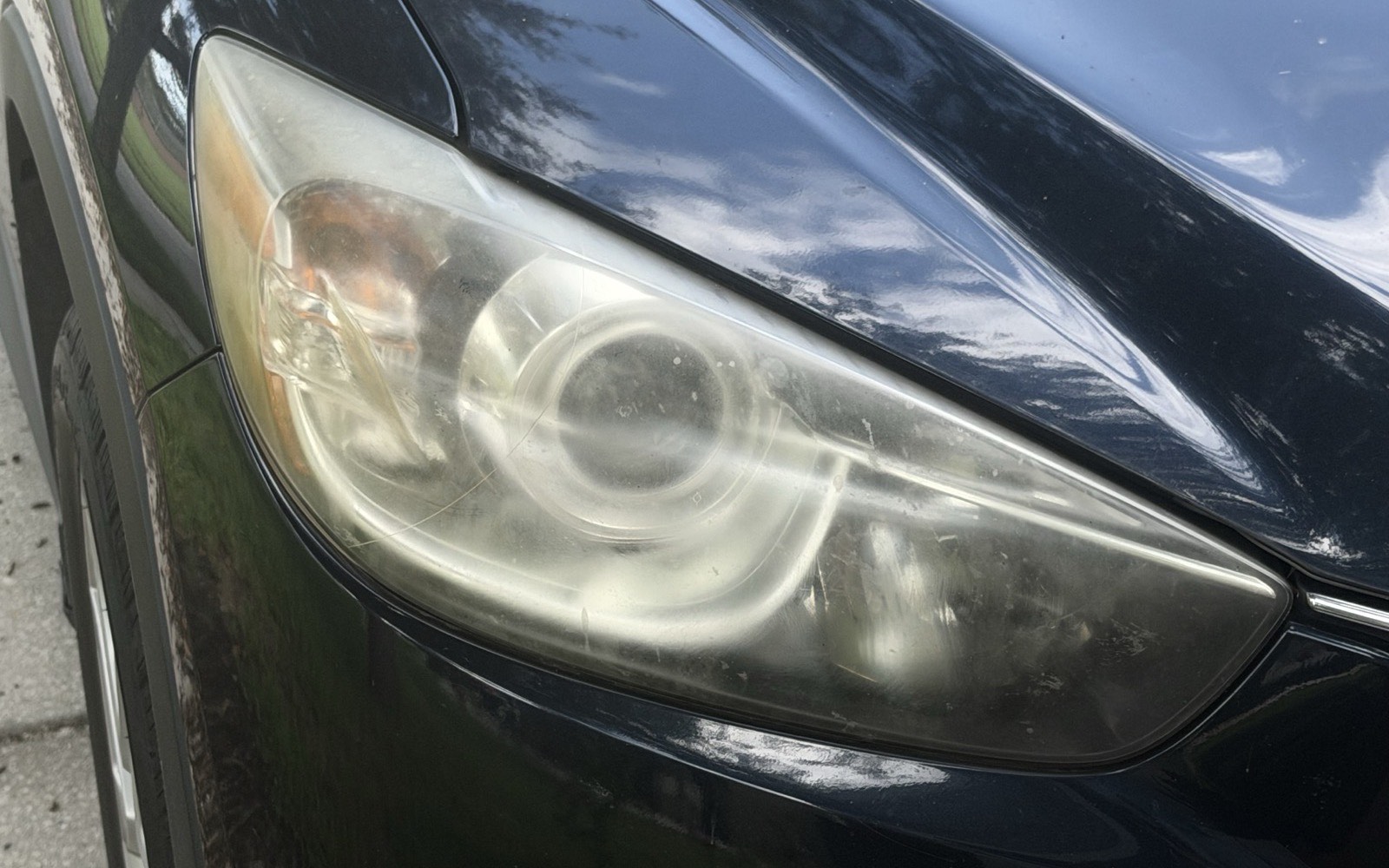
Trim and options move the number less than most sellers expect. Trim is looked up rather than argued over: your exact trim at your exact kilometres has its own valuation, and that is the line you are read against, not the base car and not the loaded one.
What is worth spending money on before you sell?
Almost nothing, and this is where sellers quietly lose the most. A new windshield, a fresh oil change and minor maintenance do not come back on an ordinary car, and often brakes do not either. People do that work hoping it adds $1,000 or $1,500 to the price, and it does not. A cracked windshield barely registers on the number unless the car is worth something like two hundred thousand dollars.
The exception is work you have already paid for. A folder of receipts is not maintenance, it is documentation, and it answers the question a buyer otherwise has to guess at, which is how the car was actually treated.
A worn paper folder open on a kitchen table with a fan of oil change and tire invoices spread out of it, a set of car keys resting on one corner
Does anything about Alberta change the number?
Less than you would hope, on the value itself. Alberta charges no provincial sales tax, and a private seller is not a GST registrant and cannot charge GST on the sale, so nothing is added on top of the price you agree. What the car is worth underneath that is set by the same three things anywhere would use.
Why is your number lower than the one in your head?
Usually because the number in your head did not come from a market. A listing tells you what one person hopes to get, not what anybody paid, and a single well priced Marketplace ad can have ten buyers competing over it, which pushes asking prices up without moving values at all.
The typical gap between what a seller expects and what a car is worth is five to ten thousand dollars. Occasionally it is far wider than that. It also tends to close on its own: people who are certain the market is wrong go and test it, and a week or two later most of them have arrived at the same number from the other direction. Testing it first is a perfectly reasonable way to find that out.
One thing that is not connected to any of this is what you still owe. A loan balance is an agreement between you and your lender and it has no bearing on what the car is worth. If you are on the wrong side of that, it is a normal sale with one extra step.
How do you get close to the number yourself?
- 1Price your exact trim, not your model. Each trim at each kilometre reading carries its own valuation. A base car and a loaded one are two different vehicles to the people pricing them.
- 2Treat every asking price as a ceiling. No Canadian consumer can look up what used cars actually sold for, which is why so many sellers end up anchored to listings. A listing is the most optimistic number ever attached to a car, and it is also the only one you can see.
- 3Know your claim total before anyone else does. The dollar amount, not just that something happened, and if you do not have it your insurer does. Better at your kitchen table than in your driveway.
- 4Subtract nothing for what you spent. Last month's brakes, the new windshield and the recent oil change are not in the number. Reading them into it is a common reason a seller believes an offer is unfair.
Do that and you will be reading the same numbers a buyer is reading. If you want the actual figure for your car rather than the range around it, that is what an offer is for. Once you have a number you believe, the rest of an Alberta sale goes quicker than most sellers expect.
What Lars Says
Lars spent thirty years appraising and buying used cars, fifteen of them at CarMax, and he has no stake in what anybody pays for yours. Ask him what he wishes every seller understood and he does not talk about paperwork or condition. He says the car is not special. He is not being unkind about it. He is describing the alternative sitting in front of every buyer you will ever speak to, which is a lane full of the same vehicle at a price he already knows. A genuinely rare car does stand out to him. Most of them, he will tell you, are not rare.

Lars Sahlen
Automotive industry veteran, 30+ years in sales, service, reconditioning and operations
Hear it in the interviewFrom our experience: We buy directly from the public across Edmonton and the surrounding Alberta towns, upwards of 3,000 cars over about four years, and every one of them was priced on the same three things: the kilometres, the claim history, and the condition we found when we got there.
Ready to skip the hassle?
Tell us about your car and a DriveOffer specialist will prepare your free offer. No obligation, no haggling.
Frequently asked questions
- How much is my car worth in Alberta?
- It is the wholesale value of your exact year, model, trim and kilometres, adjusted down for the dollar amount of any insurance claims and for condition. That is the number any buyer works from, because the same vehicle is available to them at auction whether you sell or not. Alberta charges no provincial sales tax and a private seller cannot charge GST on the sale.
- Do service records actually make my car worth more?
- They cost nothing, because you already paid for the work. A documented car removes a buyer's guesswork about how it was treated, which is the one thing that separates it from the identical cars it is being compared against. Gather the folder before anybody comes to look.
- Will a new windshield raise my offer?
- Usually not. A replaced windshield, a recent oil change and minor maintenance done in the weeks before a sale do not come back in the price on an ordinary vehicle, and people do that work hoping it adds $1,000 or $1,500. If something genuinely unsafe needs attention, deal with it, but do not treat pre-sale work as an investment in the number.
Where this came from
This article draws on our own interviews. Each link opens the transcript at the part it came from.
- What is worth fixing before you sell · Rick Carter, Owner, South Riding Automotive, and ASE-certified master technician · Rick Carter, September 12, 2026
- The faults that could be two hundred dollars or three thousand · Rick Carter, Owner, South Riding Automotive, and ASE-certified master technician · Rick Carter, September 12, 2026
- What a folder of service records is actually worth · Rick Carter, Owner, South Riding Automotive, and ASE-certified master technician · Rick Carter, September 12, 2026
- When the car isn't what was described · Hasan Tayem, Field Operations Manager · Hasan Tayem, September 10, 2026
- Why condensation in a tail light is an eight hundred dollar problem · Hasan Tayem, Field Operations Manager · Hasan Tayem, September 10, 2026
- Your car is not special · Lars Sahlen, Automotive industry veteran, 30+ years in sales, service, reconditioning and operations · Lars Sahlen, September 9, 2026
- What he looks at when he prices a car · Samir Osman, Co-Owner & AMVIC-Licensed Wholesaler, DriveOffer (Edmonton, AB) · Samir Osman, September 6, 2026
- What not to spend money on before you sell · Samir Osman, Co-Owner & AMVIC-Licensed Wholesaler, DriveOffer (Edmonton, AB) · Samir Osman, September 6, 2026
- What he wishes every seller knew · Samir Osman, Co-Owner & AMVIC-Licensed Wholesaler, DriveOffer (Edmonton, AB) · Samir Osman, September 6, 2026
Recent articles
Vehicle Value
Mileage, Condition, and Trim
How kilometres, wear, and trim change your price.
Vehicle Value
How an Accident on Your Carfax Affects Your Car's Value
What a claim on the record actually costs you, in dollars.
Vehicle Value
How Car Offers Are Calculated
How we work out a fair offer.
Selling Your Car
Trade In or Sell Outright: Which Pays More in Alberta
What each route really pays in Alberta, and where the dealer tax argument falls down here.
Vehicle Value
Why a Car Offer Can Change After the Inspection
What gets checked, and what actually moves the number.